
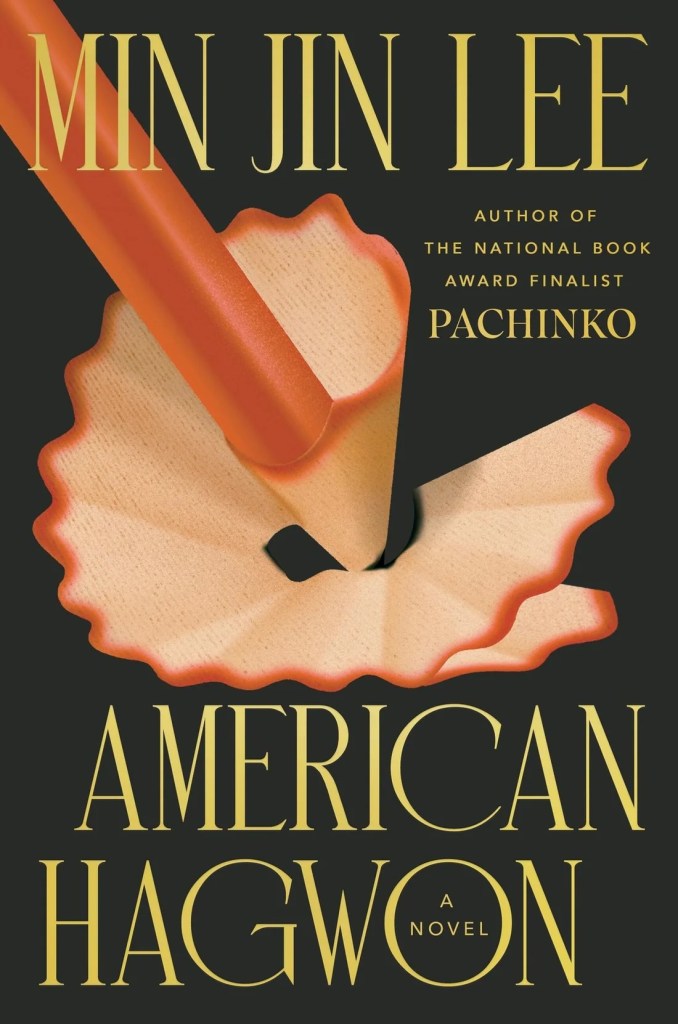
A gorgeous novel about family, coming-of-age, and middle-class striving. Min Jin Lee’s deliberately sparse prose made me cry many times and marvel at its beauty. Well worth a read!
Min Jin Lee is one of my favorite authors. Her debut novel, Free Food for Millionaires, was sensational. A carefully-written story about family and finding yourself after college, it simultaneously indicted the culture at Manhattan investment banks and the nouveau riche. Lee’s characters feel like full people, especially with her distinctive omniscient narrative voice that renders each person vividly alive and striving.
You can imagine how excited I was to read this latest book, and I was not disappointed. American Hagwon shows Lee’s talents at their fullest: a bright and warm family portrait fighting to maintain their faith against an indifferent and often malicious world. The comparisons with Jane Austen are natural: well-born siblings whose families have fallen in stature apply themselves to finding a new equilibrium. The villains also would fit right in a work by another famous English writer; they are an ambitious pair who serve as the Lord and Lady Macbeth of this novel.
Yet Lee’s novel hides a work of non-fiction within it. This essay takes the same title of the book and forces us to look upon the end result of education-as-an-industry. The word “hagwon” in the title refers to after-school education camps, where children are prepared for brutal college entrance exams. Children, whether Korean or American or both, are viciously devoured by a cult that prizes an Ivy-League degree over health and even life. This is the cult of ambition, a deadly sin in the Korean Christian diaspora that this novel focuses on.
What angers Lee the most about hagwons is that they force children to lose their love for education and grow up early. Reading, math, and science turn into enemies to conquer, allowing test anxiety and stress to fester. There’s no way to escape: the children and their parents are in the Red Queen’s Race, where the only way to stay in place is to run as fast as you possibly can. Lee has many characters say this very point over and over again, and each moment is more quotable than the next.
Lee does give us a potential solution to this problem: randomization, where after students reach a certain base level, we allocate scarce resources at random. It’s a fair approach, and one that I want to talk more about in a separate essay. But her larger point seems to be that the only real solution is independence and time. Each of the three siblings she follows in the novel change their minds about their goals as they go through early adulthood.
Lee says something that is both easy to hear and difficult to believe: life happens and people change. No one becomes happy by achieving their ambitions. By its nature, ambition can never be achieved. Rather, they are happy despite not achieving their ambitions, which is the only thing that a person can do.
Overall, American Hagwon manages to balance two books within a single novel: a perfectly-paced family story that will have you crying with the characters and a deeply-felt essay about the problem of college admissions and middle-class striving. I cannot recommend this book enough.

