
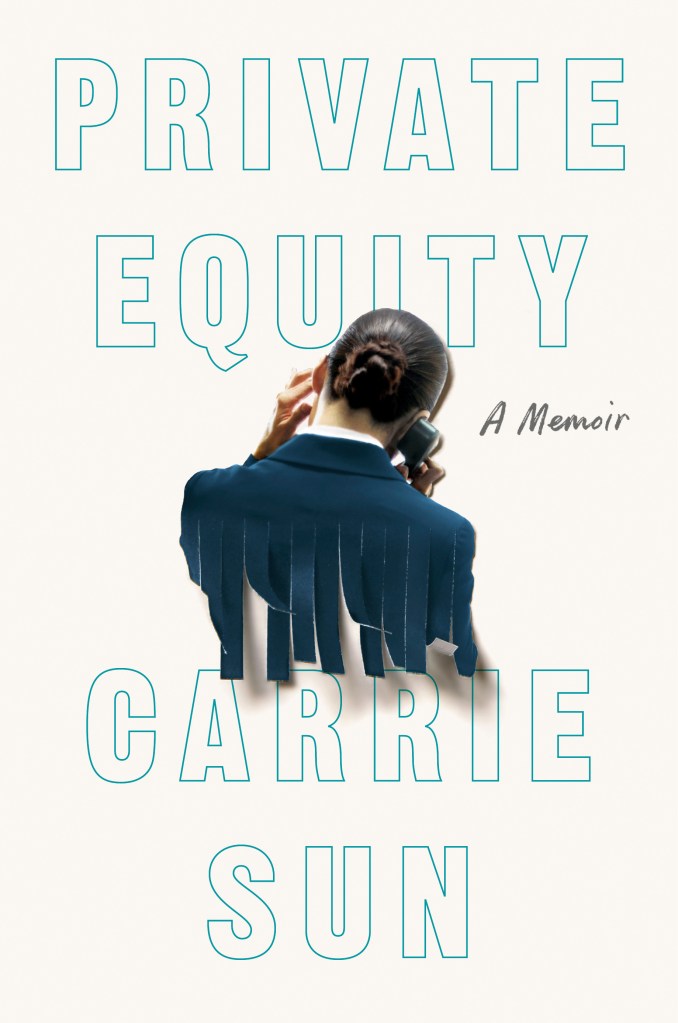
When I first started reading this book, I did not believe it was a memoir. The tone was of an undercover journalist, exploring enemy territory by pretending to be a naive personal assistant. Sun writes in a style that alternates between detached observation and vulnerable therapy-speak. Her discordant style works remarkably well to reflect the strange world of the hedge fund she worked at, where a “good” billionaire squeezes maximal efficiency out of a committed staff. It’s not an easy read, but it’s a peek under the curtain at the life that the so-called lucky few get to lead: a cold and obsessive world built only for machine-like humans.
There’s a lot I loved in this book: Sun focuses on a two year period of her life with maximal drama and presents vignettes familiar to anyone who is catching up with a work-friend over brunch: an emotionally-manipulative boss, overworked colleagues who happily betray each other, privileged rich kids, backroom deals, a crazy ex, and disappointed parents.
She doesn’t lean in to celebrity gossip or billionaire glazing: her boss is clearly just an obsessive recluse who made money the center of his life. He was talented enough (or more likely, lucky enough) to make a lot of money and enter into a feedback loop of more money, more fame, and more investment into his hedge fund. By the end of the book, I felt bad for him: he clearly needs therapy rather than just more millions of dollars.
Sun also effectively intertwines her personal story and her parents’ stories into the narrative, providing an excellent case study for burnout and its causes. We all inherit worldviews from our childhood, and early adulthood offers a time to question and soften our assumptions. Sun has clearly been through a lot, but she maintains a willingness to expose the broken parts of herself, her mistakes, and her suffering. Often the book reads like a condensed version of her therapy sessions, and despite the solipsistic viewpoint, I felt for her and saw how I could have made her decisions. Perhaps this reflects more on me than her writing, but I believe that the choices she made between selling out and staying true to herself is a shared human story.
I loved the starts of her political consciousness that you can spot between the lines. Perhaps it was a safe decision to veer away from a truly polemic plotline: it would be cliche for her to emerge a proud socialist from her experience. But I wish her occasional political asides targeted structural factors maintaining inequality. The book hit the highest points when she directed her anger at the unfairness of the market: private investment firms beat the market not by being smart but by being large and in-the-know.
Sun makes the excellent point that only large firms or rich people have the ability to take risky bets because only they can shrug off loses. Yes, you can only win big if you have courage. But courage has no cost if you’re big enough. I’ve alluded to this same idea in one of my previous articles. Sun highlights times when her boss could get early access to CEOs and other decision-makers, giving them somehow-legal almost-inside information. Clearly, the unfairness rankled her, especially when the hedge fund was not willing to let their own employees enjoy the returns of the firm. She also hinted at political contributions from her firm, pointing to a dark money ecosystem that exists beyond the knowledge of ordinary citizens. I would have loved if Sun had explored these journalism-adjacent themes in more depth.
Overall, her book was an excellent read, in equal parts a memoir, a self-help guide, and an exposé. I would recommend it to anyone thinking about how to balance work, life, and ethics.

