
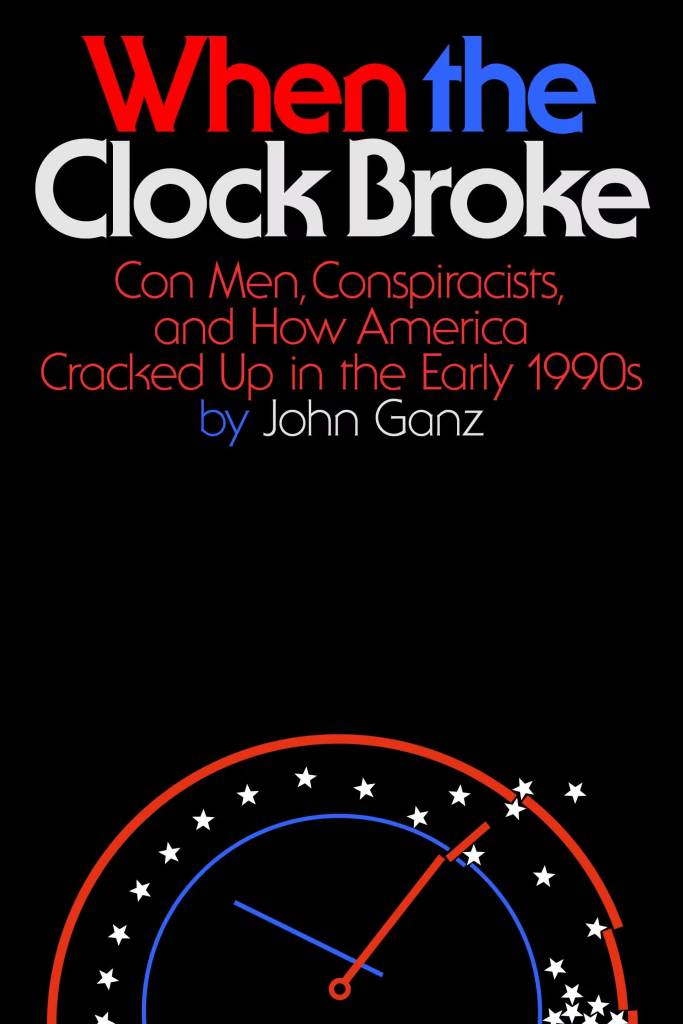
A deeply-researched account of a nebulous right-wing political coalition that emerged from the leftovers of Reagan era. Ganz focuses on a few of the biggest names of the era: Ross Perot, Rush Limbaugh, Pat Buchanan, and Rudy Giuliani and he uses these men to illustrate the counter-revolutionary fervor against the Civil Rights era of the 60s and 70s. He draws a clear parallel between this strange golden age of demagogues and our current time. We share with this era a growing divide between rich and poor, concerns about crime and race, and an ascendant right-wing.
I was taught American history in the late 1900s as a steady progress towards greater rights for all. Martin Luther King Jr., the March on Washington, Lyndon Johnson’s War on Poverty, immigration reform allowing in new immigrants from Asia and Africa, growing acceptance of queer Americans, and only briefly interrupted by the Reagan tax reduction interregnum. However, Ganz identifies several blips in this narrative. Why did David Duke, a former KKK leader, suddenly gain popularity? How did Democrats start losing in rural areas? Why did Ross Perot have such a strong showing as a third-party presidential candidate? Why did Korean-owned business in LA go up in flames in 1992?
Ganz ties these anomalies to a diverse counter-revolution against the hippie movement of the 70s. Fringe figures on the right, including white supremacists and conspiracy theorists, took advantage of real populist anger at the rich who benefited from the Reagan tax cuts and labor outsourcing. Sometimes they pointed this anger at rich elites; often they redirected this anger towards immigrants and Black Americans. While these movements emerged quickly and seemed powerful, they often faltered and fell apart amidst bickering between charismatic leaders who were essentially con men.
Ross Perot exemplifies this stereotype. Ganz portrays him as the Elon Musk of his time: a strongman who bullied his employees and treated them like soldier in his private army, he relied on no-bid government contracts for his business while deriding the welfare state. Sound familiar to you? To gain public prestige, he leaned into a conspiracy theory about American prisoners of war left behind in Southeast Asia. Ganz extensively details Perot’s haltering presidential campaign, which ultimately gained the highest third-party share of the vote in nearly a century but dissolved at the end without any strong policy positions.
This trajectory is common to nearly all the right-wing movements that Ganz documents: a sudden rise driven by a single inciting incident or motive, growth into a substrate of open-minded right-wing voters fueled by left-leaning press outrage and free coverage, a peak of influence clouded by scandal, and a equally sudden decline into embittered non-voters.
Overall, Ganz’s book provides a detailed view into the right-wing movements of the 90s, from rise to peak to dissolution, and valuable insight into how the right-wing movements of today will evolve. I personally felt like I learned so much nuanced history from his extensively researched narratives. Ultimately, his book argues that we cannot redress the chaotic politics of now without addressing the root cause of these movements: localized socio-economic humiliation and anger at wealthy elites.

